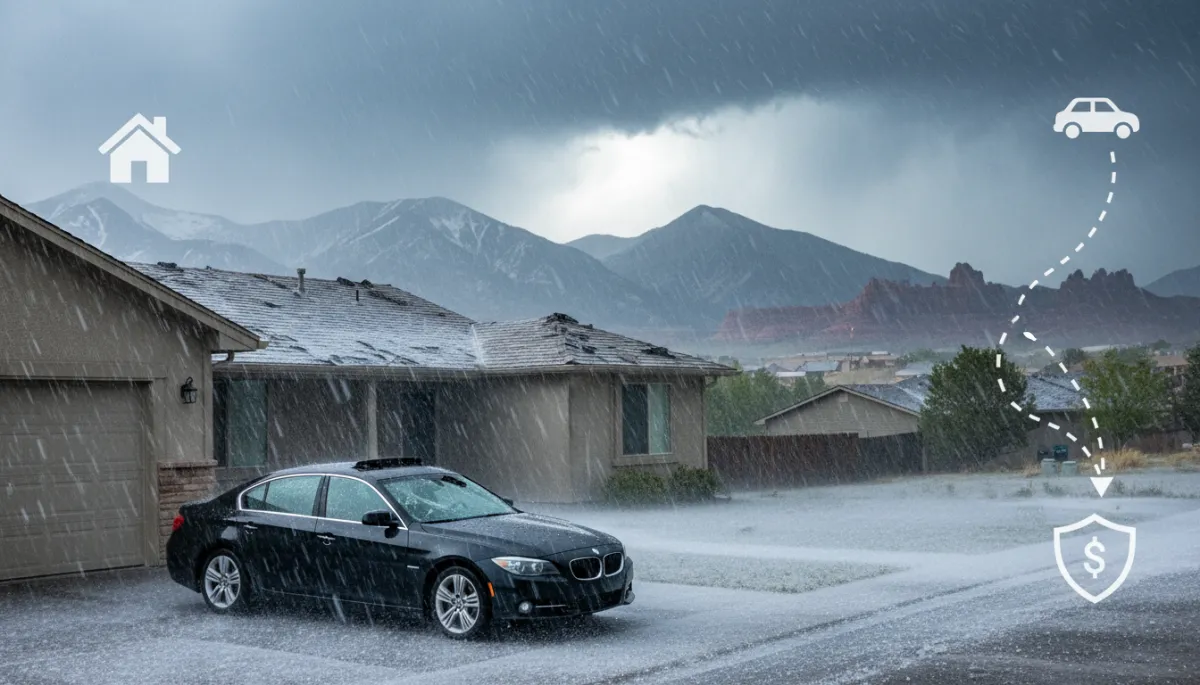
Hail Damage Claims: Midway Utah Guide
Home Insurance, Auto Insurance, Hail Damage, Insurance Claims, Hail Storm Midway
Navigating Hail Damage After the Midway, Utah Storm: What Homeowners and Drivers Need to Know
The recent hail storm in Midway, Utah left many residents staring at dented cars and bruised roofs, wondering what to do next. This guide explains what happened, how hail can impact your property, and how to handle Home Insurance and Auto Insurance claims confidently after hail damage.
The September 17, 2026 Hail Storm in Midway, Utah: What Actually Happened
On the evening of September 17, 2026, around 7:00 PM MDT, a powerful thunderstorm rolled across Wasatch County and directly over Midway, Utah. According to a Local Storm Report from the National Weather Service (NWS), hailstones reached about 1.50 inches in diameter—roughly the size of ping-pong balls. Radar also indicated wind gusts up to 60 mph, strong enough to strip shingles, damage siding, and shred tree branches.
While some online listings mention hail in Midway on September 18, multiple storm-tracking sources agree that the confirmed, ground-level hail event occurred on September 17. The following day brought radar-indicated smaller hail, but not the same destructive, ping-pong-sized stones that hit Midway that Thursday evening. For residents, the date matters: your Home Insurance and Auto Insurance carriers will ask exactly when the Hail Storm Midway event occurred when you file insurance claims.
How Hail Damages Homes and Vehicles: What to Look For
Hail Damage to Your Home
Hail around 1.50 inches can be deceptively destructive. Even if you do not see gaping holes in your roof, there may be subtle but serious hail damage that can shorten the life of your home’s exterior and lead to leaks months or even years later. Common signs include:
Roof shingle bruising and granule loss – Dark spots, soft bruises when you press on shingles, or bare patches where protective granules have been knocked off.
Dented metal components – Dings on gutters, downspouts, flashing, metal ridge vents, and roof vent caps are often the first visible clues of hail impact.
Cracked or chipped siding and trim – Vinyl siding can crack or chip, while fiber cement or wood may show impact marks and broken paint.
Window screens and frames – Torn screens and dented window frames are common after a severe hail storm in Midway or anywhere else in Utah’s Wasatch Back.
Even small dents and bruises matter. When hail knocks off the protective granules on asphalt shingles, the underlying material is exposed to UV rays and moisture, which accelerates aging and can void certain roof warranties. That is why Home Insurance policies generally treat hail as a covered peril and why catching hail damage early is so important for Midway homeowners.
Hail Damage to Your Vehicle
For vehicles parked outside during the Midway hail storm, damage can range from cosmetic to severe. With hailstones around ping-pong-ball size, you might see:
Dents on the hood, roof, and trunk – These are usually the most obvious signs of hail damage on a car or truck.
Damaged trim and moldings – Plastic trim pieces can crack or break under repeated hail impacts.
Broken or chipped glass – Windshields and windows may crack, chip, or completely shatter when hit by larger stones, especially when combined with strong winds.
Most hail-related Auto Insurance claims are handled under comprehensive coverage, sometimes called “other than collision.” If you only carry liability coverage on your vehicle, hail damage is unlikely to be covered. Understanding your policy before a storm hits can help you decide whether adding comprehensive coverage is worth the cost, especially in a hail-prone state like Utah.

Prompt documentation of hail dents and broken glass can strengthen your auto insurance claim.
Key Things Every Midway Resident Should Know About Hail Storms
1. Hail Size and Wind Speed Matter
Not all hail storms are equal. The September 17 hail storm in Midway produced stones around 1.50 inches, but the damage potential also depends heavily on wind speed and direction. With gusts up to 60 mph reported, hailstones can strike your roof and siding at an angle, increasing the force of impact and the likelihood of damage. Smaller hail with strong winds can sometimes do more harm than larger hail falling straight down at lower speeds.
2. Damage Is Not Always Obvious Right Away
After a hail storm, you might walk around your property and see only a few dents on gutters or a slightly torn window screen. It is easy to assume everything else is fine. However, hail damage to roofs can be subtle and may not cause an immediate leak. Months later, you might notice water stains on ceilings or peeling paint, only to discover that hail bruised shingles and allowed moisture to penetrate slowly. For this reason, many roofing contractors in the Midway and Heber City area offer hail inspections to catch issues early and document them for potential Home Insurance claims.
3. Your Insurance Policy Has Time Limits and Deductibles
In Utah, insurers generally expect you to report hail damage in a timely manner. While every policy is different, state guidance suggests that companies should contact you within about 15 days of a claim and accept or deny it within roughly 30 days, unless more investigation is needed. Waiting too long to file can complicate your claim, especially if another storm hits later and it becomes harder to prove which event caused the damage.
Many Utah homeowners are also discovering that their policies carry separate wind or hail deductibles, sometimes several thousand dollars or even a percentage of the home’s insured value. After the Midway hail storm, some residents may find that their deductible for hail damage is higher than they realized. Knowing this in advance can help you decide whether to file a claim or pay out of pocket for minor repairs.
💡 Pro Tip: Before storm season, review your Home Insurance and Auto Insurance deductibles specifically for hail and wind. A quick conversation with your agent can prevent expensive surprises later.
4. Beware of High-Pressure Contractors After a Storm
After a high-profile event like the Hail Storm Midway, it is common for roofing and repair contractors—some local, some from out of state—to go door to door offering “free inspections” and promising to “take care of everything” with your insurance company. While many contractors are reputable, be cautious of anyone who:
Pressures you to sign a contract on the spot.
Offers to “waive” or “absorb” your deductible (this can violate Utah law and jeopardize your claim).
Demands large upfront payments before any work or clear estimate.
Instead, consider getting multiple estimates from established local companies with good reviews. Your insurer will send an adjuster at no cost; a trustworthy contractor can then compare their findings with the adjuster’s report to make sure all legitimate hail damage is included.
Home Insurance and Hail Damage: How Claims Typically Work in Utah
Understanding Your Coverage: ACV vs. RCV
Most Utah Home Insurance policies list hail as a covered peril. However, how much you receive for a claim depends on whether your policy pays on an Actual Cash Value (ACV) or Replacement Cost Value (RCV) basis:
ACV – The insurer pays the cost to repair or replace your damaged property, minus depreciation. Older roofs often receive lower payouts under ACV because they are considered to have less remaining useful life.
RCV – The insurer pays the cost to repair or replace damaged property with new materials of similar kind and quality, without subtracting for age or wear (though you may receive payments in stages as repairs are completed).
If the Midway hail storm damaged your roof, the difference between ACV and RCV can be thousands of dollars. Check your declarations page or call your agent to confirm which type of coverage you have, especially for your roof and exterior surfaces.
Step-by-Step: Filing a Home Insurance Claim After the Midway Hail Storm
Protect your home from further damage. If hail punched holes in your roof or broke windows, make temporary repairs—such as tarping a roof or boarding a window—to prevent water intrusion. Save all receipts; many policies reimburse “reasonable and necessary” mitigation expenses.
Document everything. Take clear photos of your roof (if it is safe), gutters, downspouts, siding, decks, and outdoor equipment. Capture both wide shots and close-ups of hail damage. If you have pre-storm photos, keep those for comparison.
Report the claim promptly. Contact your insurer’s claims number or use their app. Provide the date and approximate time of the Hail Storm Midway event (September 17, 2026, around 7:00 PM), describe the damage, and ask for your claim number and next steps.
Schedule the adjuster visit. An insurance adjuster will visit your property to inspect hail damage. You may also invite a trusted roofing contractor to be present so they can discuss findings in real time and ensure no damage is overlooked.
Review the estimate carefully. The adjuster will prepare an estimate of needed repairs or replacement. Compare this with contractor bids. If you believe something is missing—such as damaged gutters, vents, or detached structures—ask your insurer to reconsider or request a reinspection.
Understand how payments will be issued. If you have a mortgage, checks for major structural repairs may be made out to both you and your lender. You might receive an initial ACV payment, with additional funds released as repairs are completed and invoices submitted.
Auto Insurance and Hail Damage: Protecting Your Car After the Storm
Does Your Auto Policy Cover Hail Damage?
In Utah, Auto Insurance coverage for hail damage typically falls under comprehensive coverage. This part of your policy applies to non-collision events such as theft, vandalism, falling objects, and weather events like hail storms. If your vehicle suffered dents, broken glass, or damaged paint during the Midway hail storm, comprehensive coverage is what would respond—subject to your deductible.
If you only carry state-minimum liability coverage, your policy will generally not pay for hail damage to your own vehicle. This is an important consideration for older cars that you might have dropped comprehensive coverage on. In hail-prone regions, many drivers choose to keep comprehensive coverage even on older vehicles if they park outside regularly.
Filing an Auto Insurance Claim After Hail Damage
Inspect your vehicle in good light. After the storm passes, move the car into a well-lit area. Look across the hood, roof, and trunk from different angles to spot dents. Check glass for cracks or chips and photograph everything thoroughly.
Contact your insurer promptly. Provide the date and location of the hail storm in Midway, a description of the damage, and your policy number. Ask whether you should visit a preferred body shop or wait for an adjuster inspection, depending on your insurer’s process.
Get repair estimates. Many body shops and paintless dent repair (PDR) specialists can provide a detailed estimate of hail damage repairs. Some insurers have direct repair programs, but you generally have the right to choose your own repair facility.
Decide whether to repair or accept a payout. If your car is older and the hail damage is mainly cosmetic, you might decide not to repair every dent. However, be aware that unrepaired hail damage can reduce your vehicle’s resale value and may impact future claims if another storm hits.
Repeated hail claims in the same area can influence future premiums, both for Home Insurance and Auto Insurance. Insurers look at local claim patterns when setting rates. While you should never hesitate to file a legitimate claim, it is smart to be strategic about when repairs are worth going through insurance versus paying out of pocket for minor damage below or near your deductible.
How Hail Storms Affect Insurance Rates and Coverage in Utah
Severe weather events like the September 17 hail storm in Midway contribute to a broader trend affecting insurance across Utah. As hail and wind events become more frequent and more expensive for insurers, companies may respond by:
Raising premiums for Home Insurance and Auto Insurance in hail-prone ZIP codes.
Increasing wind/hail deductibles or introducing percentage-based deductibles tied to your home’s insured value.
Tightening underwriting standards, sometimes leading to non-renewals for homes with older roofs or repeated hail claims.
Utah has already been highlighted in national discussions about increasing non-renewals and rising homeowners insurance costs. For Midway residents, that means it is more important than ever to:
Shop around for competitive coverage and work with a knowledgeable local agent or broker.
Maintain your roof and exterior, documenting upgrades that may help your risk profile.
Understand your policy’s exclusions, deductibles, and coverage limits before the next hail storm hits.
Practical Preparation Tips Before the Next Hail Storm in Midway
While you cannot prevent hail, you can reduce your risk and protect your finances by taking a few proactive steps:
Park vehicles under cover when severe weather is forecast. A garage, carport, or even a sturdy parking structure can dramatically reduce hail damage to your car and avoid the need for an Auto Insurance claim.
Consider impact-resistant roofing materials. When it is time to replace your roof, ask about Class 3 or Class 4 impact-resistant shingles. Some insurers offer discounts for these upgrades, and they can better withstand hail storms common in Utah’s mountain valleys.
Trim trees near your home and driveway. Strong winds and hail can break branches, which can then fall on roofs or vehicles. Regular tree maintenance reduces this risk and may limit the severity of storm damage.
Create a home and vehicle photo inventory. Take periodic photos of your home’s exterior and your vehicles when they are in good condition. These images provide powerful evidence of “before and after” when filing hail damage insurance claims.
Bringing It All Together: Your Action Plan After the Midway Hail Storm
The Hail Storm Midway on September 17, 2026, was more than just a dramatic weather event—it was a real-world test of how prepared local homeowners and drivers are for sudden, costly hail damage. Whether you are dealing with a bruised roof, dented siding, or a car that looks like a golf ball, the steps you take in the days and weeks after the storm can make a significant difference in your financial outcome.
Start by ensuring safety and preventing further damage. Then, document everything thoroughly and report your claim promptly to your Home Insurance and Auto Insurance providers. Work with reputable, local contractors and do not be afraid to ask questions about your policy—especially your deductibles, coverage type (ACV vs. RCV), and any special hail-related provisions.
Most importantly, use this storm as a reminder to review your coverage before the next one arrives. Hail is a fact of life in Utah’s high country, but with the right preparation and a clear understanding of how insurance claims work for hail damage, you can weather future storms with far less stress and uncertainty.

