The Dangers of "Cheap" Auto Insurance
The Price of "Cheap": Why Utah’s State Minimum Auto Insurance Is a Financial Trap
When shopping for auto insurance in the Beehive State, it is incredibly tempting to select the lowest legal coverage limits. The promise of a lower monthly premium sounds great for your budget—until you are involved in a real accident.
Many drivers think that "state minimum coverage" means they are completely safe. In reality, state minimums are simply a legal baseline to get your car registered, not an adequate shield for your personal bank account or home equity.
If you carry minimum limits on Utah's roads, you are taking a massive financial gamble. Here is a breakdown of why Utah's legal floor leaves you exposed and why upgrading your coverage is the smartest financial move you can make.
Breaking Down Utah's 30/65/25 Legal Minimums
Utah law dictates that every private passenger policy must provide a set amount of liability coverage and no-fault medical coverage. The minimum allowable splits include:
$30,000 Bodily Injury Liability (Per Person): The maximum amount your insurer pays for injuries to a single individual in a crash you cause.
$65,000 Bodily Injury Liability (Per Accident): The absolute limit your policy pays out for all injuries combined if multiple people are hurt in an accident you cause.
$25,000 Property Damage Liability: The total pool available to repair or replace vehicles, structures, or public property you damage.
$3,000 Personal Injury Protection (PIP): Utah’s mandatory no-fault coverage that pays your own medical bills first, regardless of who caused the crash.
While these numbers were updated to catch up with inflation, they still fall dangerously short of today's economic realities.
The Dangerous Math: Real-World Scenarios vs. State Minimums
To appreciate the risk, you have to look at what happens when these limits collide with modern repair and healthcare costs.
1. The Property Damage Problem ($25,000 Limit)
The average transaction price for a new vehicle in the U.S. hovers around $49,000, with full-size pickup trucks averaging closer to $66,000.
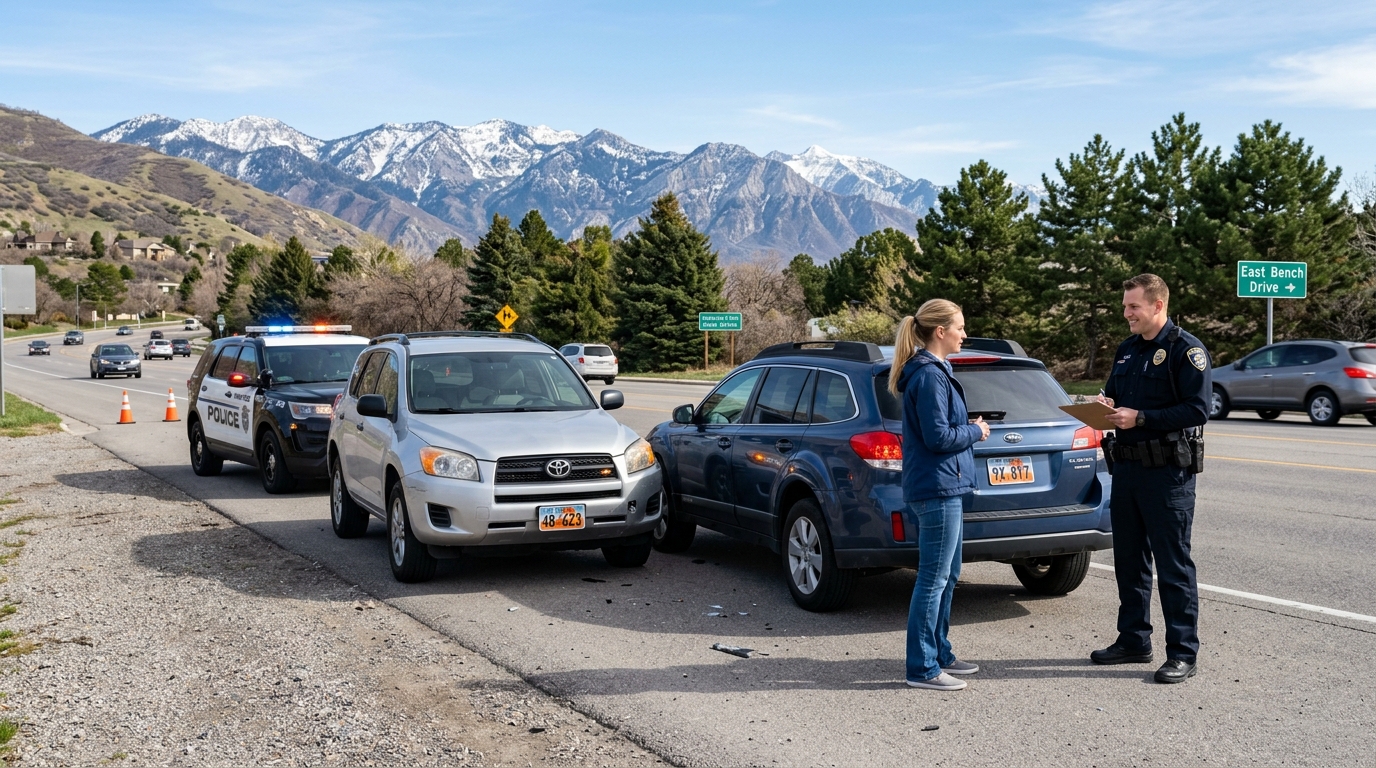
The Scenario: You slide on a patch of ice on I-15 and rear-end a newer SUV, totaling it.
The Math: If the car is worth $45,000, your policy pays out its max of $25,000.
The Risk: You are personally, legally on the hook for the remaining $20,000. The other driver's insurance company can sue you, garnish your wages, or place a lien on your property to recover their losses.
2. The Bodily Injury Crisis ($30,000 / $65,000 Limits)
Medical inflation has skyrocketed. An emergency room visit, an ambulance ride, an MRI, and a brief hospital stay can easily surpass $50,000 for a single person.
The Scenario: You cause an accident involving a vehicle carrying a family of four. Three of them suffer moderate injuries requiring medical transport and physical therapy.
The Math: Their collective medical bills total $110,000. Your policy caps out completely at $65,000 for the entire accident.
The Risk: There is a $45,000 deficit left unprotected. A personal injury attorney representing that family will look directly at your personal assets to cover the difference.
3. Burned-Through PIP ($3,000 Limit)
Because Utah is a no-fault state, your own PIP is your primary line of defense for medical bills. A single night in a hospital or a couple of specialized diagnostic scans will exhaust $3,000 before you even leave the facility. Once it runs out, you are forced to rely on your private health insurance—which comes with its own deductibles and co-pays.
The Compounding Threat: Uninsured and Underinsured Drivers
Choosing state minimums doesn't just make you a hazard to others; it leaves you completely vulnerable when someone else hits you. If you buy a minimum-limit policy, you likely don't have robust Uninsured/Underinsured Motorist (UM/UIM) protections unless specifically added.
If an uninsured driver or a driver carrying Utah's low minimums crashes into your vehicle and causes a severe injury, you may find yourself struggling to secure enough compensation to heal and fix your car. Higher policy limits give you the room to add high UM/UIM limits, protecting your family from reckless, underinsured motorists on local roads.
How Much Does It Cost to Protect Yourself?
The biggest irony of state minimum insurance is that the premium savings are usually minimal. Jumping from a state minimum policy to a premium level of protection (such as 100/300/100 liability limits) typically only costs a fraction more per month.
When you increase your coverage, you aren't just paying for numbers on a page; you are buying peace of mind. You ensure that a split-second mistake on the road won't erase your savings, put your home at risk, or compromise your family’s financial future.
Get a Free Policy Review with The Insurance Pros
Don't wait for a car crash to find out your insurance coverage isn't enough. Our team at The Insurance Pros specializes in identifying dangerous gaps in your current coverage and building affordable plans that actually safeguard your life.

